
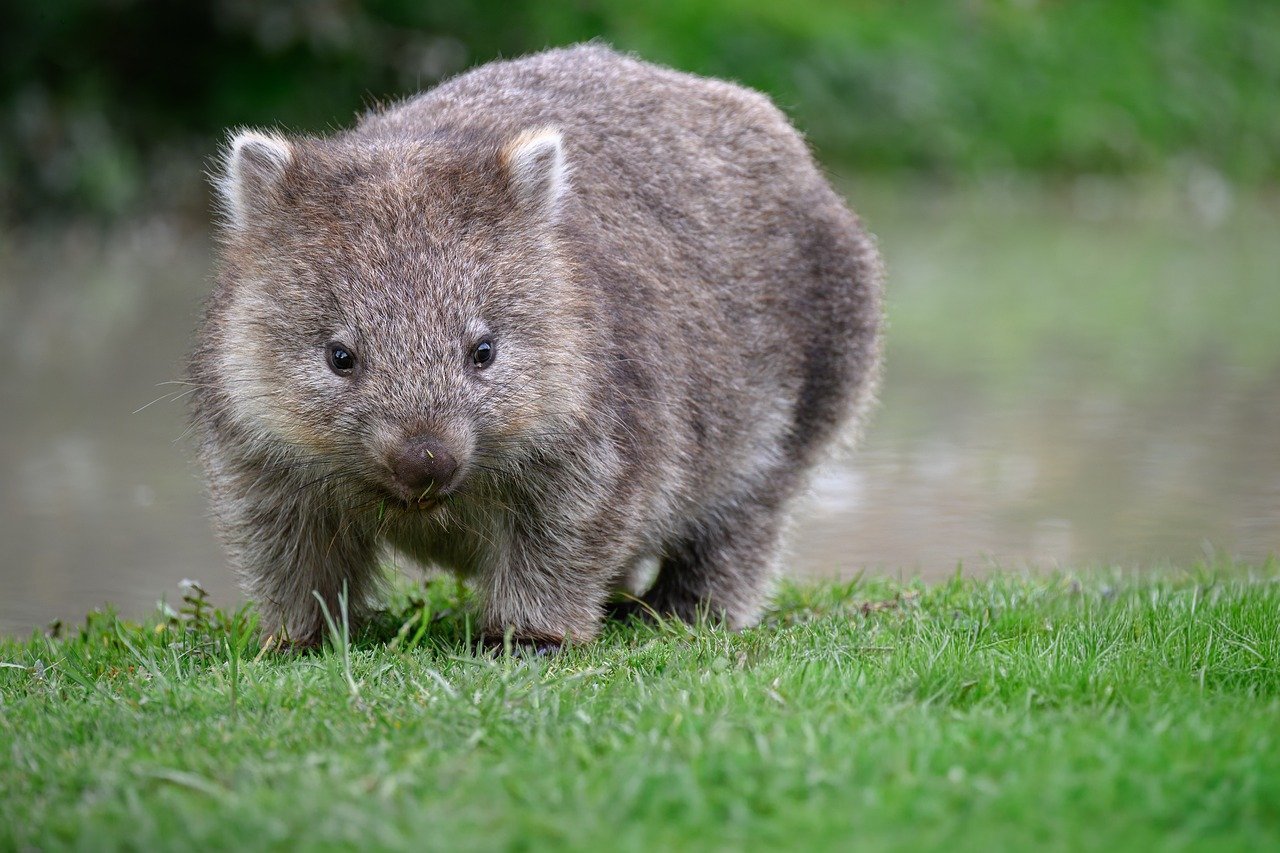
Wombats produce cube-shaped poop—and it’s not a joke or a myth, but a genuinely puzzling biological phenomenon that has fascinated scientists for years.
The wombat, a burrowing marsupial native to Australia, is known for its sturdy body and slow, waddling walk. But its most unusual trait isn’t how it moves—it’s what it leaves behind. Unlike most animals, which produce round or irregular droppings, wombats create distinctly cube-shaped feces, with flat sides and sharp edges.
At first glance, this might seem like a quirky accident of nature, but there’s actually a practical reason behind it. Wombats use their droppings to mark territory, often placing them on rocks or logs. The cube shape prevents the feces from rolling away, helping the scent markings stay in place longer. In the wild, this gives wombats a subtle but effective way to communicate with one another.
The real mystery, however, is how their bodies create these cubes in the first place. Most digestive systems produce soft, shapeless waste that only takes form as it exits the body. Wombats, on the other hand, have an unusually long and slow digestive process—sometimes taking up to two weeks to fully digest their food. During this time, the material becomes very dry and firm.
Researchers have discovered that the wombat’s intestines have varying elasticity along their walls. Some sections stretch more than others, while certain areas contract at different rates. This uneven pressure gradually shapes the material into distinct edges and corners as it moves through the digestive tract. By the time it’s expelled, the poop has formed into a surprisingly consistent cube.
It’s a strange reminder that even the most ordinary aspects of biology can hide extraordinary details—sometimes in the most unexpected shapes.
Which furry mammal lays eggs? Find out here!