
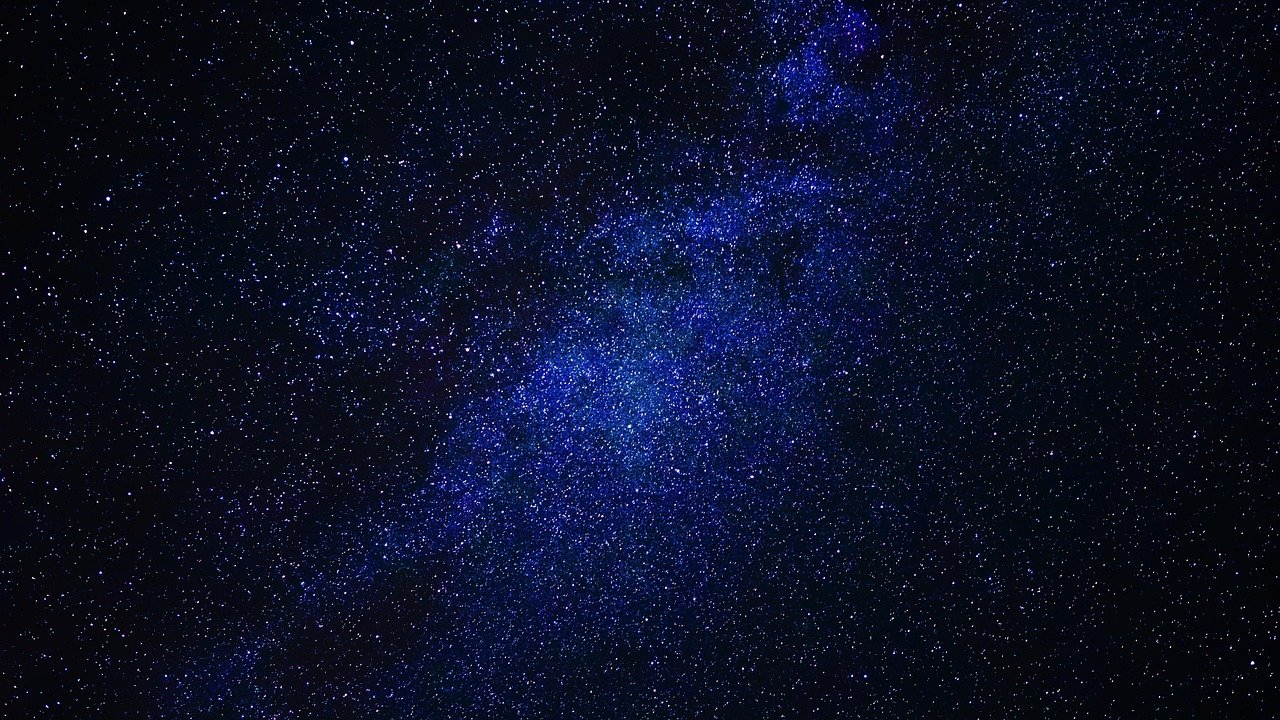
One of the most fascinating facts about the universe is that most of it remains completely invisible, and we still don’t fully understand what it is. Scientists estimate that everything we can observe—such as stars, planets, galaxies, and glowing gas—makes up less than 5% of the universe. The other 95% consists of two mysterious components: dark matter and dark energy.
Dark matter is especially puzzling. It doesn’t emit, absorb, or reflect light, making it invisible to telescopes. Still, its existence is inferred from its gravitational pull. Galaxies rotate so quickly that, without extra unseen mass, they would break apart. Dark matter acts like an invisible glue that holds these enormous structures together. Even more amazing, it seems to create a vast cosmic web that influences how galaxies cluster across the universe.
Dark energy might be even more extraordinary. Unlike gravity, which pulls objects together, dark energy pushes the universe apart. It explains the universe’s accelerated expansion, meaning galaxies are moving away from each other faster and faster. This discovery drastically changed our understanding of the universe’s future.
What’s really mind-blowing is that we are essentially studying shadows. We can see the effects of dark matter and dark energy, but their exact nature and how they work are still unknown. Basically, most of the universe is made of something we cannot directly see or detect—showing how much of reality remains a profound mystery.
Which clouds float in dark matter? Find out here!