
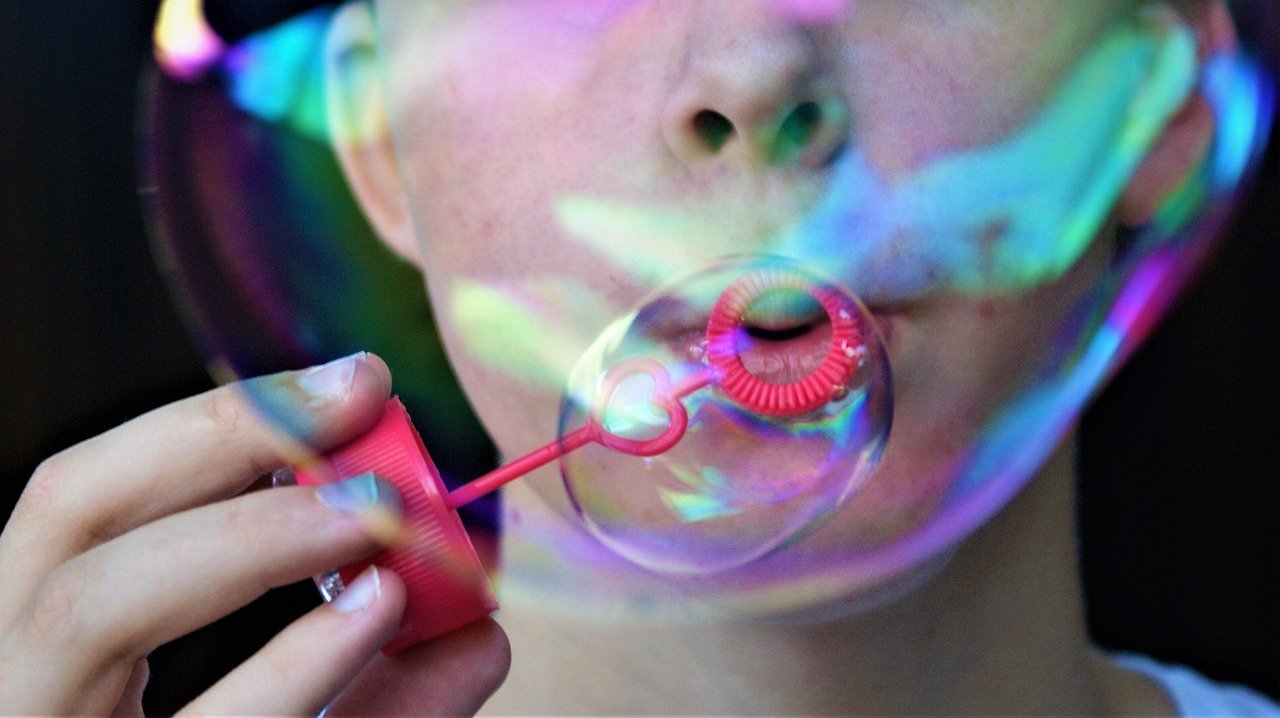
Creating a huge soap bubble is part science and part art—a joyful blend of chemistry, technique, and patience. Whether you want to wow kids at a backyard party or capture shimmering giant spheres in photographs, understanding the right solution, tools, and techniques will dramatically improve your results. Here’s a practical guide to making consistently large, durable soap bubbles.
Make the right bubble solution.
A large bubble is a good solution. Commercial bubble mixes can work, but homemade recipes often perform better and cost less.
Basic large-bubble recipe:
6 cups water (distilled or filtered if your tap water is hard)
1 cup dish soap (Dawn or Joy are popular choices)
1/4 cup glycerin or 1/2 cup light corn syrup
Why these ingredients matter:
Dish soap provides the surfactants that form the thin film.
Glycerin or corn syrup strengthens the film by attracting water and slowing evaporation, which helps bubbles last longer and stretch farther.
Water quality affects film behavior; distilled water reduces mineral interference.
Optional boosters:
Add 1–2 teaspoons of baking powder (not baking soda) to help stabilize pH.
A tablespoon of PVA (polyvinyl alcohol) or a teaspoon of guar gum can create extremely durable bubbles for advanced users, but these require more careful mixing.
Mixing tips:
Mix gently to avoid foaming—bubbles in the solution reduce performance. Stir until uniform; don’t whisk or shake.
Let the solution rest for several hours or overnight. Resting allows air bubbles to escape and the ingredients to fully integrate, improving performance.
Choose or make the proper tools.
A big bubble needs a big, even frame.
Simple DIY wand:
Two lightweight sticks (bamboo skewers, dowels, or tent poles) about 3–6 feet long.
A cotton string 4–12 feet long, tied to each end to form a loop. For a larger loop, use a thicker braided cotton cord; it holds the film shape better.
Assembly:
Tie the string ends to the sticks using small loops so the string can move freely.
Create a small loop at one end; when you dip it and spread the two sticks apart, it forms a triangular opening that helps pull a uniform film.
Technique for blowing huge bubbles
Location and weather:
Choose a calm day with high humidity, such as after rain or early in the morning. Wind quickly pops large bubbles.
Cooler temperatures and shaded areas increase bubble life by reducing evaporation.
Dipping:
Submerge the loop fully in the solution, then lift it gently to avoid creating foam. Make sure the string is thoroughly saturated,d and the film looks even.
Form the bubble:
Stand with the wind at your back, or create a gentle breeze by walking slowly forward.
Slowly spread the sticks apart to open the loop, then move forward or let the wind fill the sail. Gentle, steady motion is key—jerky pulls will tear the film.
For the largest spheres, move away from the film in a straight line rather than waving the wand. A smooth forward motion allows the bubble to expand uniformly.
Sealing and detaching:
To release the bubble, either keep moving forward until the film separates naturally or gently pinch the loop together near one side to let the bubble peel off. Don’t yank or snap the wand.
Advanced tips for size and durability
Layered loops: Use a double-loop wand (two parallel strings) to create thicker films that resist popping.
Protect your hands: Wet your fingers with the bubble solution before handling the film to reduce popping caused by oils and dry skin.
Use a ramp: For large, slow-moving bubbles, dip the wand, then walk down a slight slope to let the bubble expand and roll upward on the airflow.
Photography: Shoot against an overcast sky or shaded background for richer colors from thin-film interference. Faster shutter speeds capture shape, while slower speeds can create dreamy motion blur.
Troubleshooting
Bubbles pop immediately: The solution may be too weak, too foamy, or the wind may be too strong. Let the mix rest and choose calmer conditions.
Film collapses as you open the wand: The string may be too tight, or the sticks may be pulling unevenly. Loosen the knots and ensure even tension.
Bubbles form but quickly collapse: Add more glycerin or corn syrup, and increase humidity if possible.
Safety and cleanup
Avoid slippery surfaces—spilled solution can make floors slick.
Keep the solution away from pets and small children, as ingesting dish soap is harmful.
Rinse wands and store the solution in sealed containers for reuse. Dispose of excess solution down the drain with plenty of water.
With the right mix, a well-made wand, and patient, steady technique, you can create huge, shimmering soap bubbles that float like fragile planets. Practice, adjust the ingredients for your local conditions, and most importantly, have fun experimenting.
Do you like eating bananas? Then check out this method of consumption!